The desk
- Tickets with priorities and categories
- Email out on every reply
- Internal notes your client never sees
- An append-only audit log
Tickets, the equipment you look after, the hours you spend and the invoice at the end of the month, in one place. The clients you support and their staff are unlimited on every plan. Only the people answering tickets count.
You do the IT support. SIVO Hub is the software you run it on.
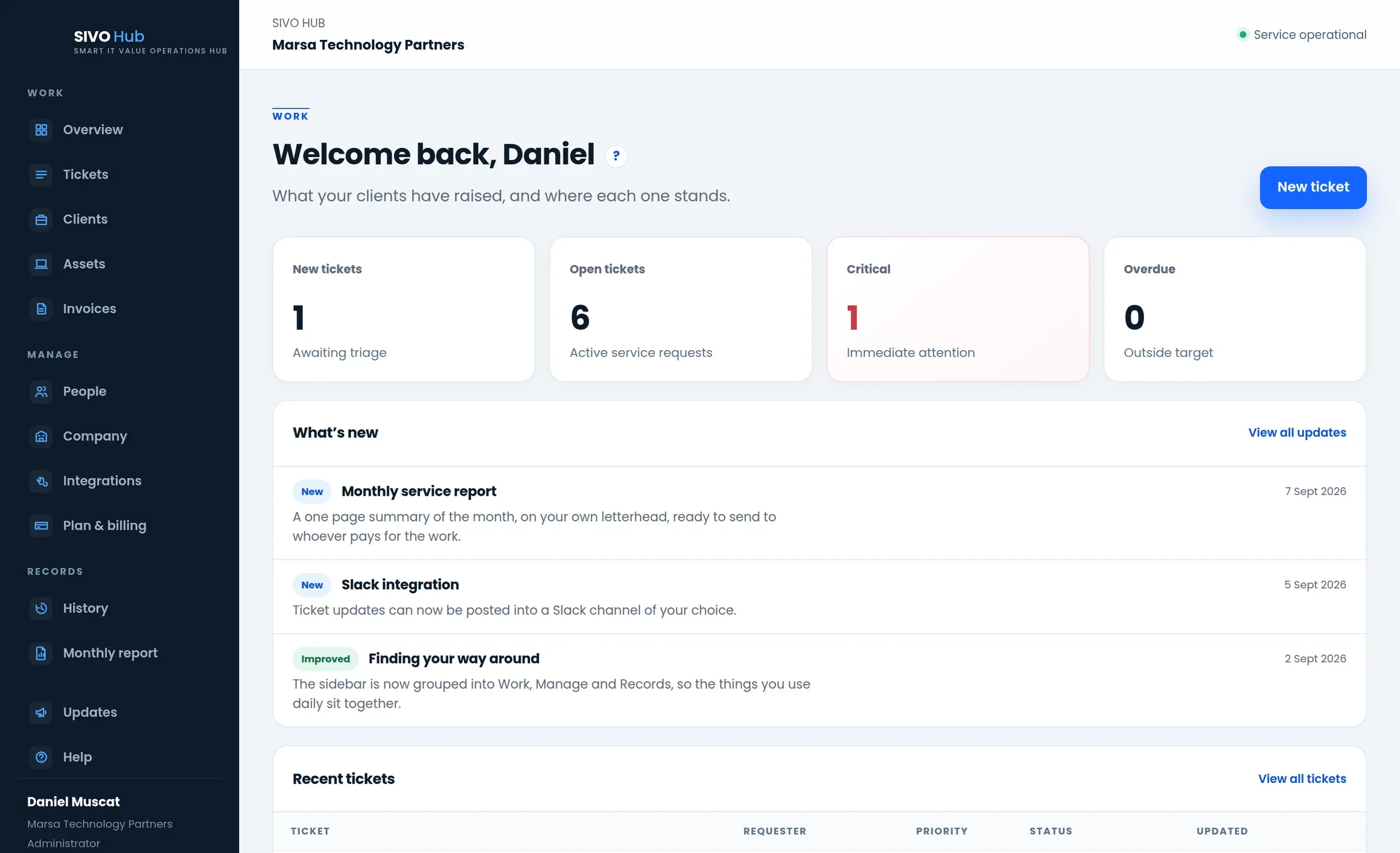
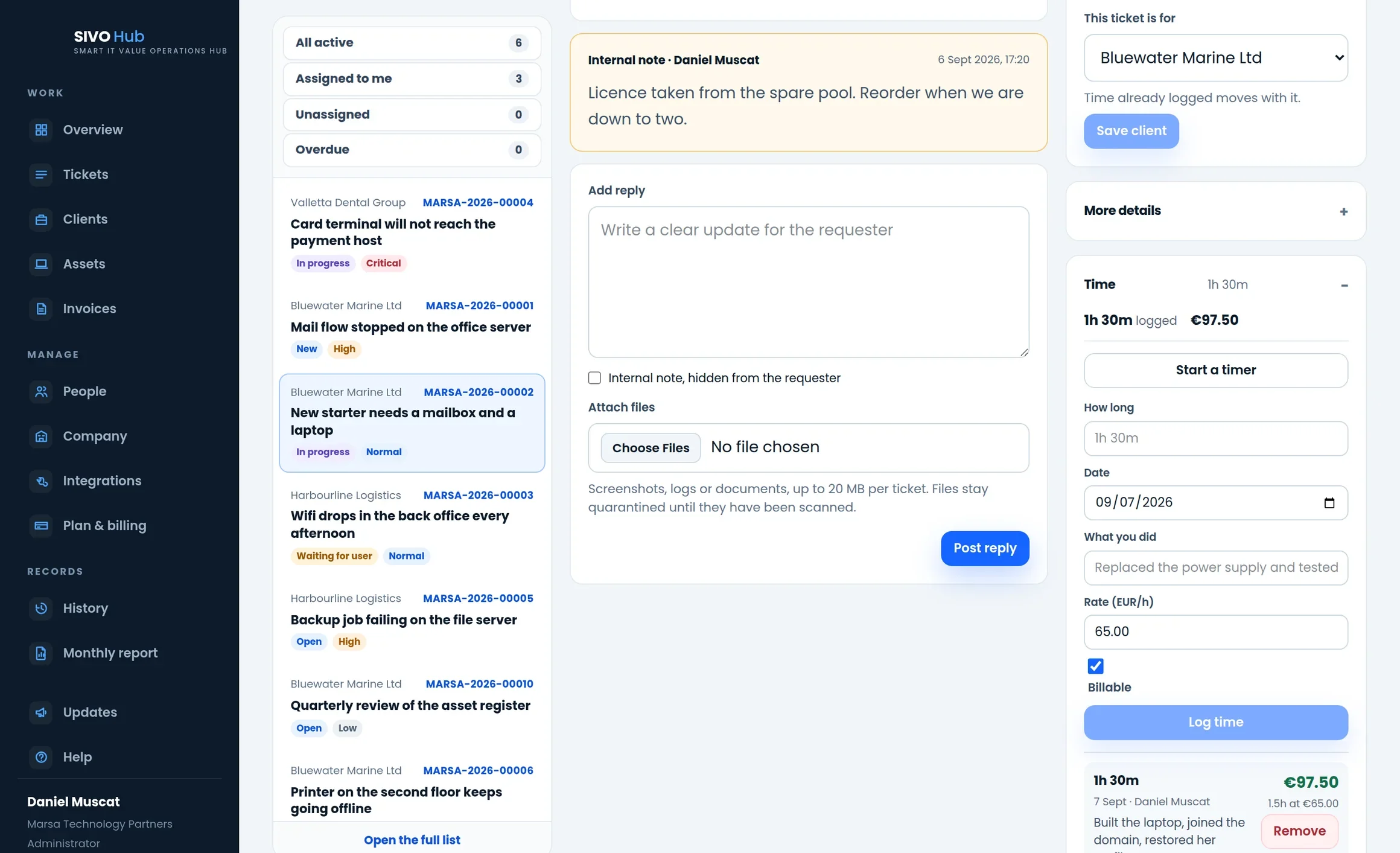
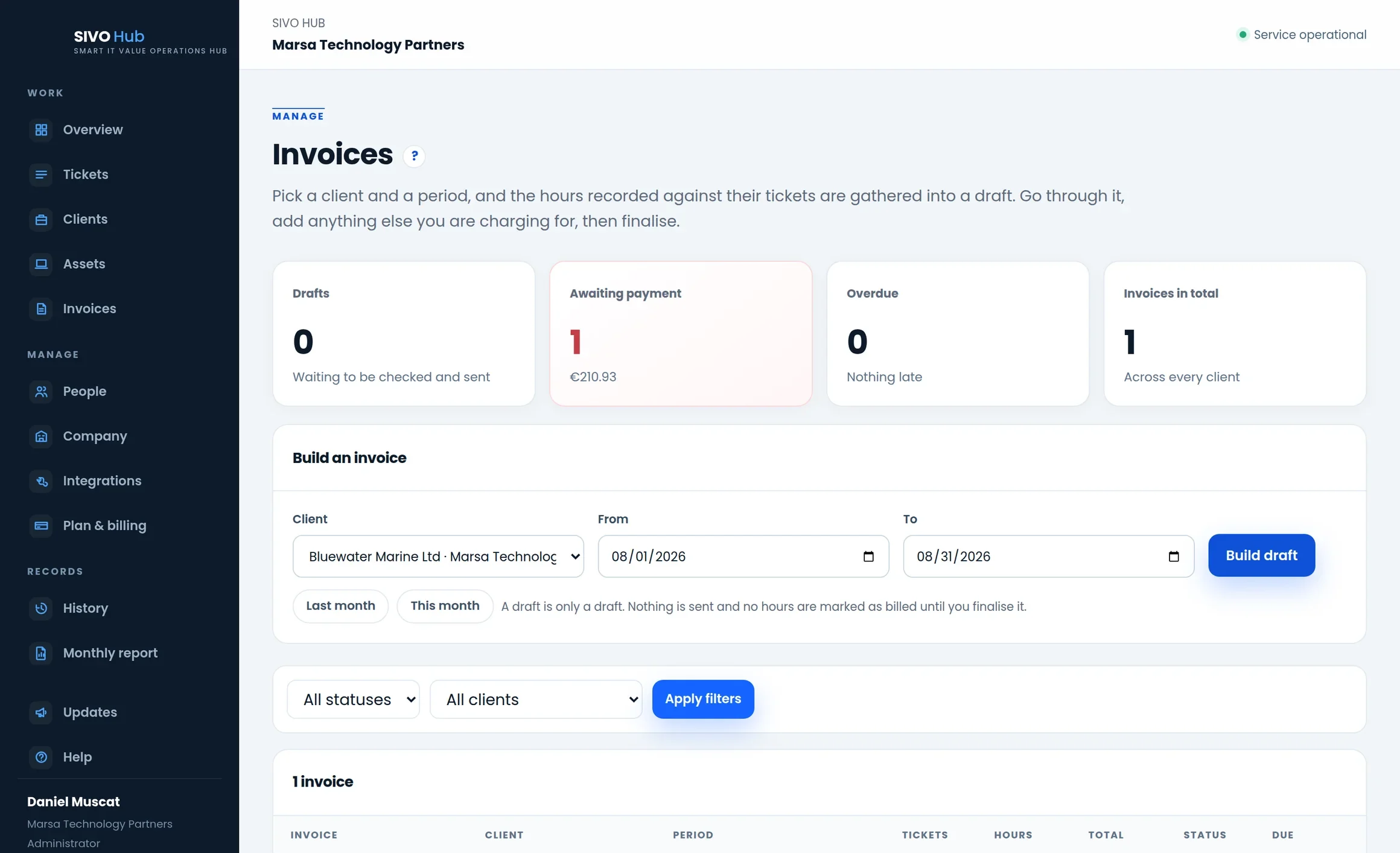
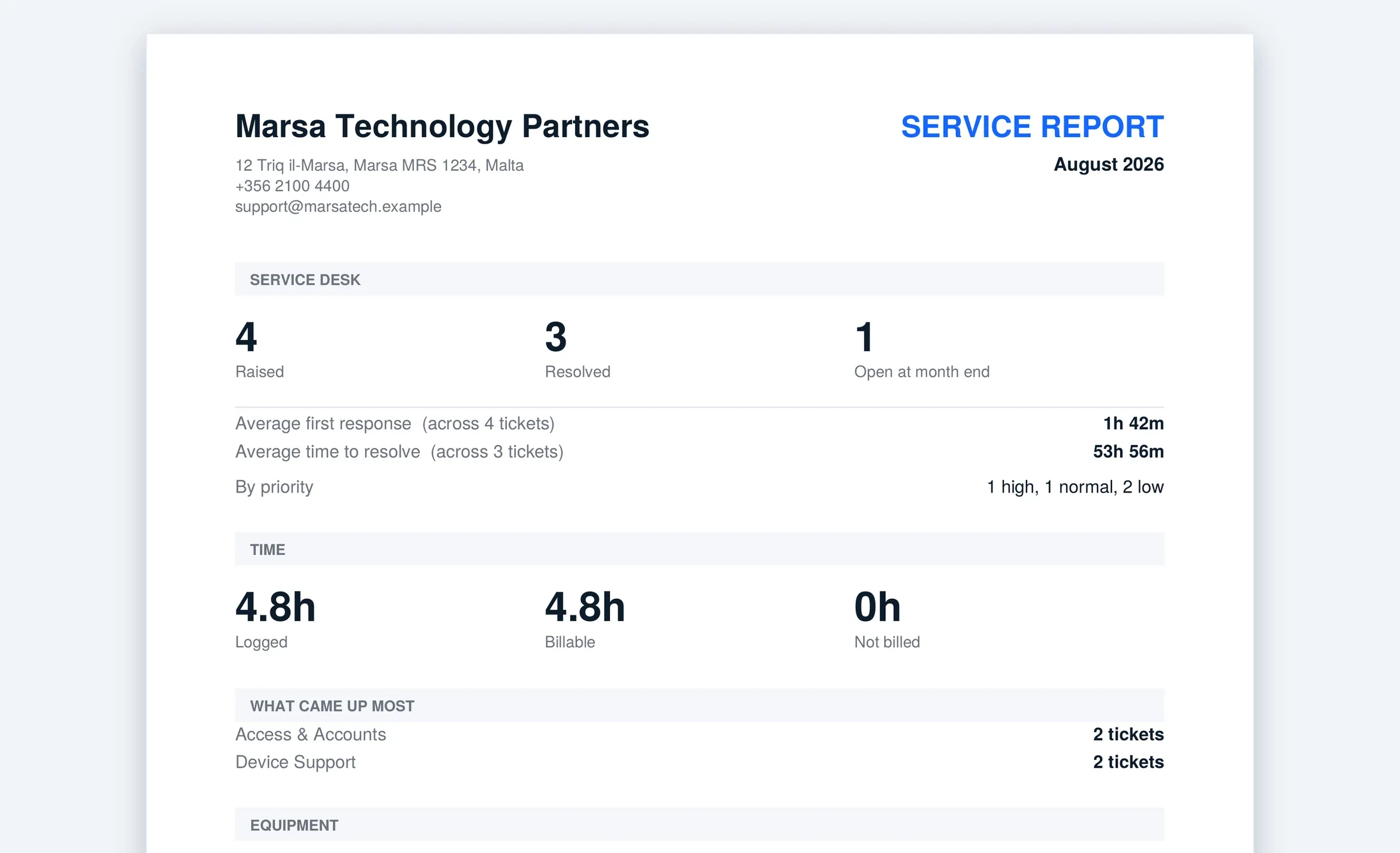
Real screens and real output from the product. The companies, people and figures in them are invented.
Three things happen every month whether you have a system or not. This is what they look like when you do.
Your client raises it from the portal, or an email arrives. It carries a priority, a first-response target and a copy to their manager if that is how they work. Nobody has to remember to write it down.
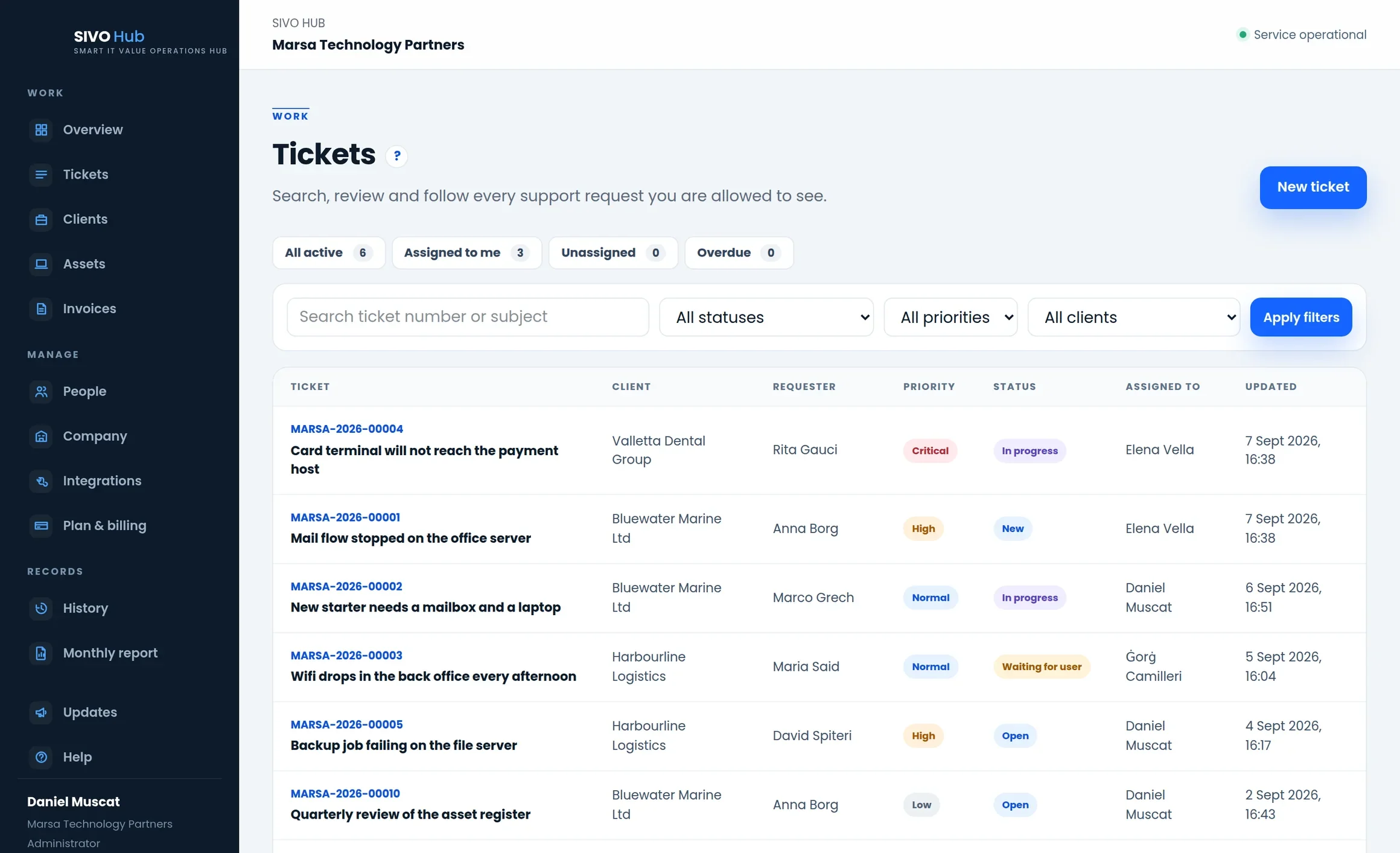
Time goes against the ticket while you are in it, at the rate agreed at the time. Notes your client never sees stay internal. The laptop you swapped is on the asset register with its warranty date.

The hours become a PDF invoice with your own details on it, and a one page service report for whoever pays. Two documents, both yours, neither of them mentioning us.
A webhook you paste in yourself. Messages carry the reference, the subject and a link, never the description. What somebody wrote in confidence stays in the ticket.
Your people sign in with the work account they already have. We receive a name and an address, and nothing about tickets travels back.
The same again for a Google shop. Either one can be restricted to your own organisation.
No consultant, no integration project and no per-connector fee.
The parts that matter are the ones you cannot see from the outside, so here is exactly what they are.
Every company sees only its own people, tickets and equipment. It is checked on the server on every request rather than hidden in the interface.
Attachments are scanned for malware and stay behind the same authorisation as the ticket they belong to.
Replies, status changes, assignments, deletions and settings are all recorded, for both sides, in a log nothing removes an entry from.
Every measure above is written down, dated and specific. You can read the lot on the security page, including where SIVO Hub stands on ISO 27001 and SOC 2.
The plan follows how many of your own people answer tickets. The clients you look after and their staff never cost anything, however many there are.
Pick one and the plans that fit appear. The first difference is who you support, and the second is how many of you there are. Nobody gets a smaller product for paying less.
Prices exclude VAT, which is added at checkout or to your invoice at whatever rate applies where you are. An annual invoice gives you two months free, by email. See everything that is included, and the three things that are not.
What has actually changed, in a sentence each. Nothing on this list is a promise with a date on it.
The sidebar is now grouped into Work, Manage and Records, so the things you use daily sit together.
Ticket updates can now be posted into a Slack channel of your choice.
A one page summary of the month, on your own letterhead, ready to send to whoever pays for the work.
SIVO Hub is built and run by Christian Cilia. There is no team page because there is no team, and you will be talking to the person who wrote the thing you are asking about. That is worth saying plainly rather than dressing up.
It exists because IT people end up running several clients out of a mailbox and a spreadsheet, and the month ends before the invoice does.
SIVO Hub does not provide IT support. It is the tool for the people who do.
Email what you actually deal with and I will tell you whether this fits, including if it does not.
[email protected]7 days, everything switched on, no card and no sales call.
Start 7 day free trial